THE TRUTH BEHIND THE PERFECT PICTURE: WHAT DO FILTERS TELL US ABOUT OUR FEAR OF IMPERFECTION?
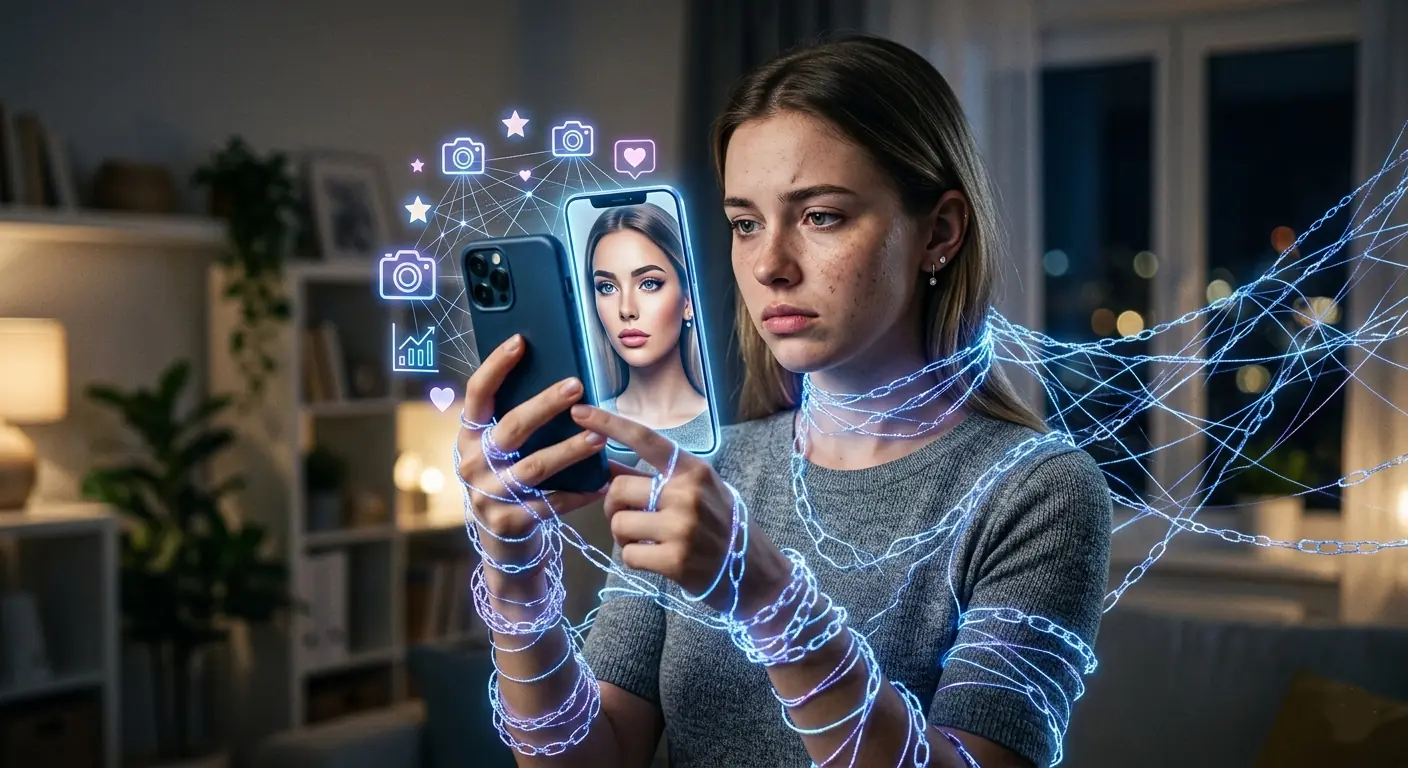
The Truth Behind the Perfect Picture: What Do Filters Tell Us About Our Fear of Imperfection?
Why has an entire generation decided to replace reality with a flawless, algorithmic version of itself? Behind the beauty filters, automated touch-ups, and curated feeds lies a deeper, silent epidemic: a profound fear of being seen as we truly are.
Scroll through any social network today, and you will encounter an identical standard of human existence. Skin is uniformly poreless, lighting is perpetually cinematic, and every background is meticulously arranged. The digital world has successfully engineered a simulated perfection where aging, fatigue, and flaws have been completely coded out of existence.
At first glance, this obsession with visual polish looks like simple modern vanity—a harmless byproduct of smartphone cameras and teenage trend-following. But if we peel back the aesthetic layers, a much more clinical and unsettling truth emerges. This isn’t an era of self-love; it is an era of systemic self-rejection.
The Algorithmization of Identity
Living inside a filtered reality changes how the human brain processes self-worth. When a user applies a “correction” filter, they aren’t just adjusting pixels; they are actively telling their subconscious that their raw, authentic face is inadequate for public consumption. Over time, this creates a devastating psychological split: a pristine, highly praised digital avatar versus a real, flawed physical self that feels increasingly disappointing.
Psychologists call this the “digital dysmorphia loop.” The more a person curates their online ideal, the more they begin to fear real-world, unedited human judgment. The fear of being caught in public without the armor of a digital lens leads to acute social anxiety. We have built an environment where vulnerability is treated as a systemic failure, and authenticity is viewed as a liability.
The Terror of Judgement and the Safe Cage of Control
Why do we crave this absolute control over our image? Because perfection is an excellent hiding place. A filter is a digital firewall designed to protect us from the pain of rejection. If the world only interacts with your polished facade, then your true, fragile inner self remains safely hidden, unjudged, and unexposed.
Yet, this defensive posture comes with an immense psychological price tag: absolute isolation. True human connection cannot happen between two fictional characters. By presenting only our optimized selves to the network, we disconnect from our authentic needs, our genuine histories, and our actual peers. We become ghosts haunting our own profiles, terrified that a single unedited snapshot might shatter the illusion.
Reclaiming the Glitch in a Sanitized World
As automated systems and synchronization platforms increasingly demand that we standardize our lives, our appearance, and our behaviors, human imperfection becomes the ultimate form of resistance. The wrinkles, the scars, the asymmetry, and the spontaneous, uncurated moments of life are the only elements that data cannot cleanly predict or commodify.
When a society becomes so terrified of its own reflection that it requires an algorithmic filter just to look into a digital mirror, it has surrendered its mental sovereignty. The search for a perfect image has not elevated us; it has trapped us in a loop of permanent performance. Reclaiming our authenticity requires a radical step: dropping the filters, embracing the visual glitch, and realizing that our value lies not in how flawlessly we can be rendered by a machine, but in our unrepeatable, chaotic, and beautifully imperfect reality.